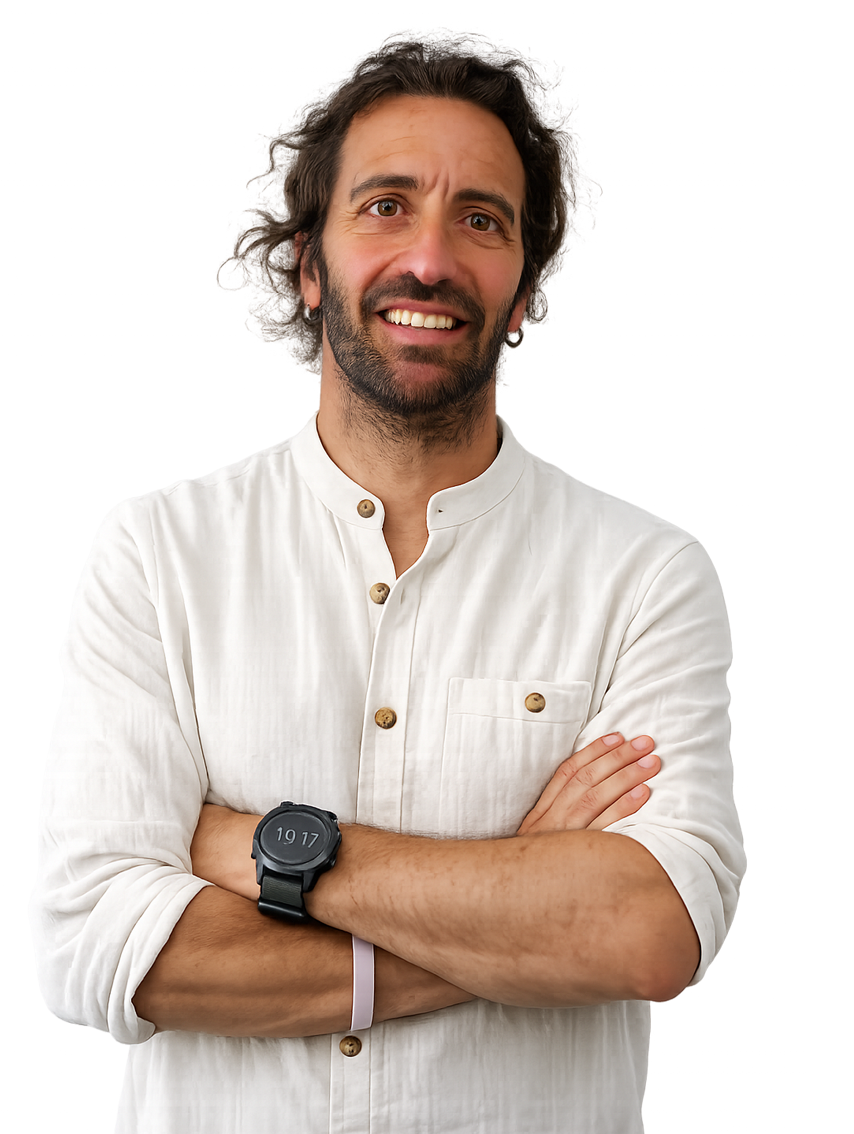
BARNABÉ MOULIN, OSTEOPATH

HELPING THE BODY REGAIN ITS NATURAL BALANCE.

Book an appointment

MY PATH INTO OSTEOPATHY

My path into osteopathy was not a linear one.
I began my professional career as a physiotherapist, with training focused on rehabilitation and a practical, hands-on approach to the body and its treatment

Barnabé Moulin

My path towards osteopathy was not a linear one.

I began my professional career as a PHYSIOTHERAPIST, with training focused on REHABILITATION and the treatment of the body from a distinctly practical and structured perspective.

Following a PERSONAL ACCIDENT, I discovered OSTEOPATHY — not as just another technique, but as a DIFFERENT APPROACH: more HOLISTIC and more aligned with the COMPLEXITY OF THE HUMAN BODY.
From that moment on, I committed myself fully to this discipline and, since 2004, I have practised OSTEOPATHY EXCLUSIVELY.

For 18 YEARS, I developed and maintained a CLINICAL PRACTICE that gradually evolved from physiotherapy into a COMPREHENSIVE OSTEOPATHIC PRACTICE.
This extensive period in private practice provided me with an essential foundation: CLINICAL RIGOUR, ATTENTIVE LISTENING, CONTINUITY OF CARE, and a DEEP UNDERSTANDING of everyday clinical issues.

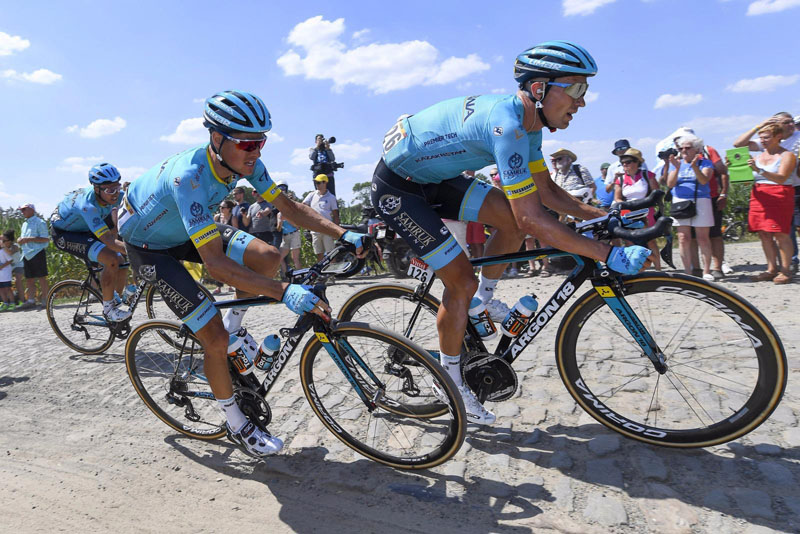
In parallel, for over 12 YEARS, I worked in ELITE PROFESSIONAL CYCLING, supporting WorldTour teams in the most demanding competitions on the international calendar.
The TOUR DE FRANCE, VUELTA A ESPAÑA, GIRO D’ITALIA and many other races formed part of this journey, including direct involvement in GRAND TOUR VICTORIES.

This DUAL EXPERIENCE — the consistency of CLINICAL PRACTICE and the demands of HIGH PERFORMANCE SPORT — has profoundly shaped my way of working.
Today, every person who walks through my door benefits from this combination: the PRECISION and CALM of clinical practice, together with the ANALYTICAL CAPACITY and ADAPTABILITY developed in PROFESSIONAL SPORT.

Beyond my professional activity, SPORT has always played a central role in my life.

I have practised CYCLING, CAVE DIVING, CLIMBING, LONG-DISTANCE MOUNTAIN TREKKING, and various ENDURANCE DISCIPLINES.
Currently, RUNNING holds a primary place, experienced as a DEMANDING and PASSIONATE practice that directly informs my CLINICAL PERSPECTIVE and my UNDERSTANDING OF MOVEMENT.

WHAT IS OSTEOPATHY?

Osteopathy emerged in the late 19th century in the United States through the work and observations of Andrew Taylor Still, who sought to understand the human body from a global and integrated perspective.

At a time when many medical answers were still limited, his approach was rooted in the in-depth study of anatomy, physiology, and above all in the direct observation of people and their ADAPTIVE CAPACITIES.

More than an isolated technique, osteopathy was conceived from the outset as a way of understanding the body as a whole, with attention to its balances, compensations, and inherent capacity for self-regulation when the right conditions are present.”

A WHOLE-BODY APPROACH

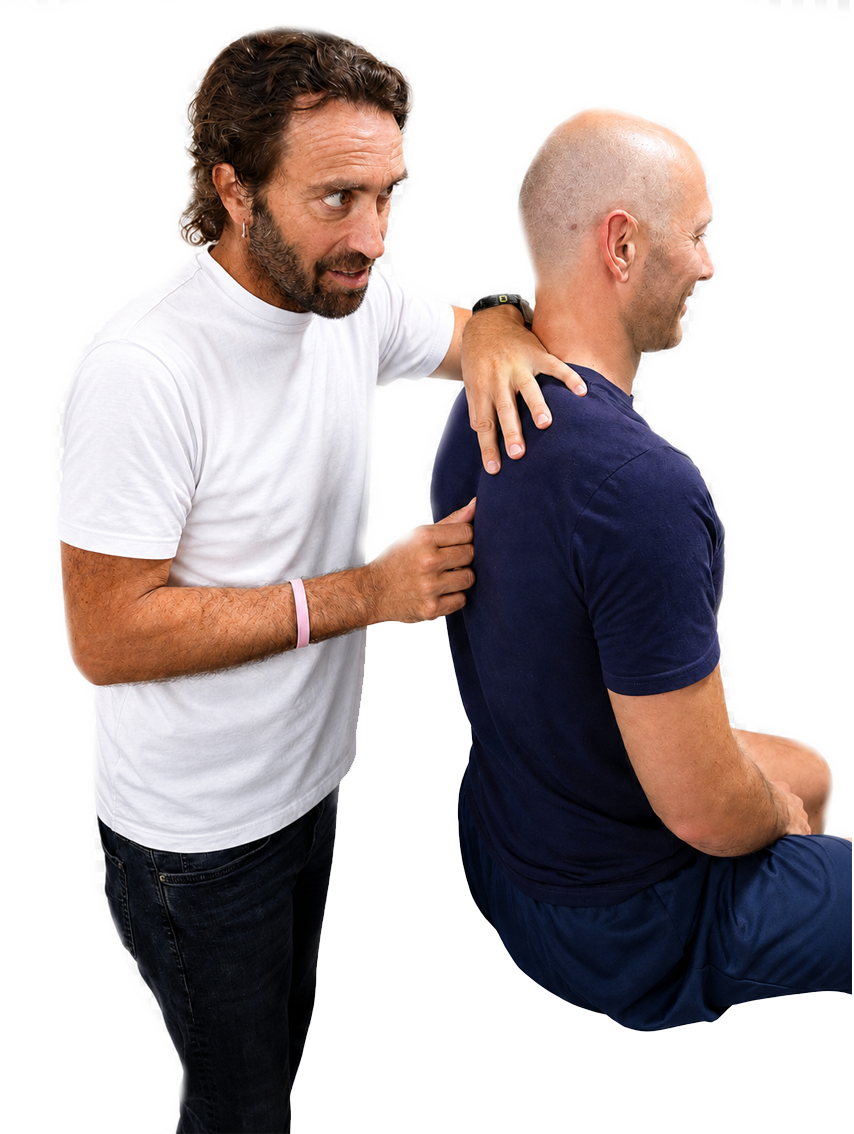
Beyond its historical origins, osteopathy is now understood as a hands-on approach focused on the body as a whole. It is not simply about treating one area or applying a technique automatically, but about understanding why the body, at a given moment, is struggling to adapt, move, or function freely.

From this perspective, each intervention begins with an overall assessment of the body: how it moves, how it adapts, and how it responds to the demands of daily life.”

BOOK ONLINE

Book an appointment

SPORT AND PERFORMANCE:

Osteopathy and Sport

My experience in elite sport does not define a practice reserved for professional athletes. On the contrary, it brings greater depth and rigour to an approach designed for everyone.

Precision Brought into Clinical Practice

Just as innovations developed in Formula 1 eventually benefit everyday vehicles, the work carried out in high-performance sport provides tools, precision and analytical insight that are equally valuable in everyday clinical practice.

The Human Body Always Comes First

From an osteopathic perspective, there are no “different” bodies. A high-level athlete is still a human being, with the same systems, the same adaptive capacities, and the same vulnerabilities as anyone else.

The Difference Lies in the Context

What changes is the context: workload, intensity, the competitive environment, and in professional cycling, often a nomadic setting shaped by the urgency of competition. In clinical practice, the environment is different. There is more time, more stability, and proper follow-up, allowing the same level of precision to be adapted to each individual.

Running and trail running

Running and trail running are among the most fundamental expressions of human movement. They place demands on foot and ankle mobility, overall coordination, load absorption, and movement efficiency. Osteopathic care supports these demands by improving mobility, optimising biomechanics, and helping reduce the risk of overuse and injury.

Cycling

Cycling is a demanding sport characterised by specific and repetitive movement patterns. Falls, injuries, and prolonged strain can leave lasting effects on the body. Osteopathic care addresses both the consequences of trauma and the imbalances associated with the pedalling motion, promoting better adaptation and more effective recovery.

Endurance sports

Endurance sports place the body under considerable physical and physiological stress. They affect not only the musculoskeletal system, but also the digestive system, the autonomic nervous system, and recovery mechanisms. Osteopathic support aims to preserve the body’s ability to adapt to these repeated demands.

Cycling osteopathy

Prevention, Movement Efficiency and
Autonomy

Injury prevention is a central focus, with particular
attention given to strength, proprioception and
physical conditioning. Together with mobility, these
elements are essential for improving movement efficiency
and performance, while also supporting long-term
physical activity.

Beyond sport itself, physical activity helps develop four
fundamental capacities for adaptation throughout life:
mobility, strength, balance and
cardiorespiratory fitness.
Preserving and maintaining these capacities is essential,
at any age, in order to remain independent and able to
adapt to the demands of daily life.

Consultation & accompaniment

What is a session like?

A session begins long before the meeting on the table. It starts the moment the person decides to book an appointment. That decision already reflects a specific situation, a discomfort, a limitation or a question, and above all a willingness to change something.

01
First listening

Reason

The first goal is to understand the real reason for the consultation: what has brought the person here, how they experience their problem, and what they expect from this accompaniment.

This exchange phase is essential because it allows us to place the request within a global and human context, not only from the symptom, but also from the person's history, their current life stage, and the way their body is organizing itself.

02
Initial assessment

Beginning

The first consultation is not fundamentally different from the following ones, beyond administrative aspects. Clinical work is based from the start on a complete assessment of the person.

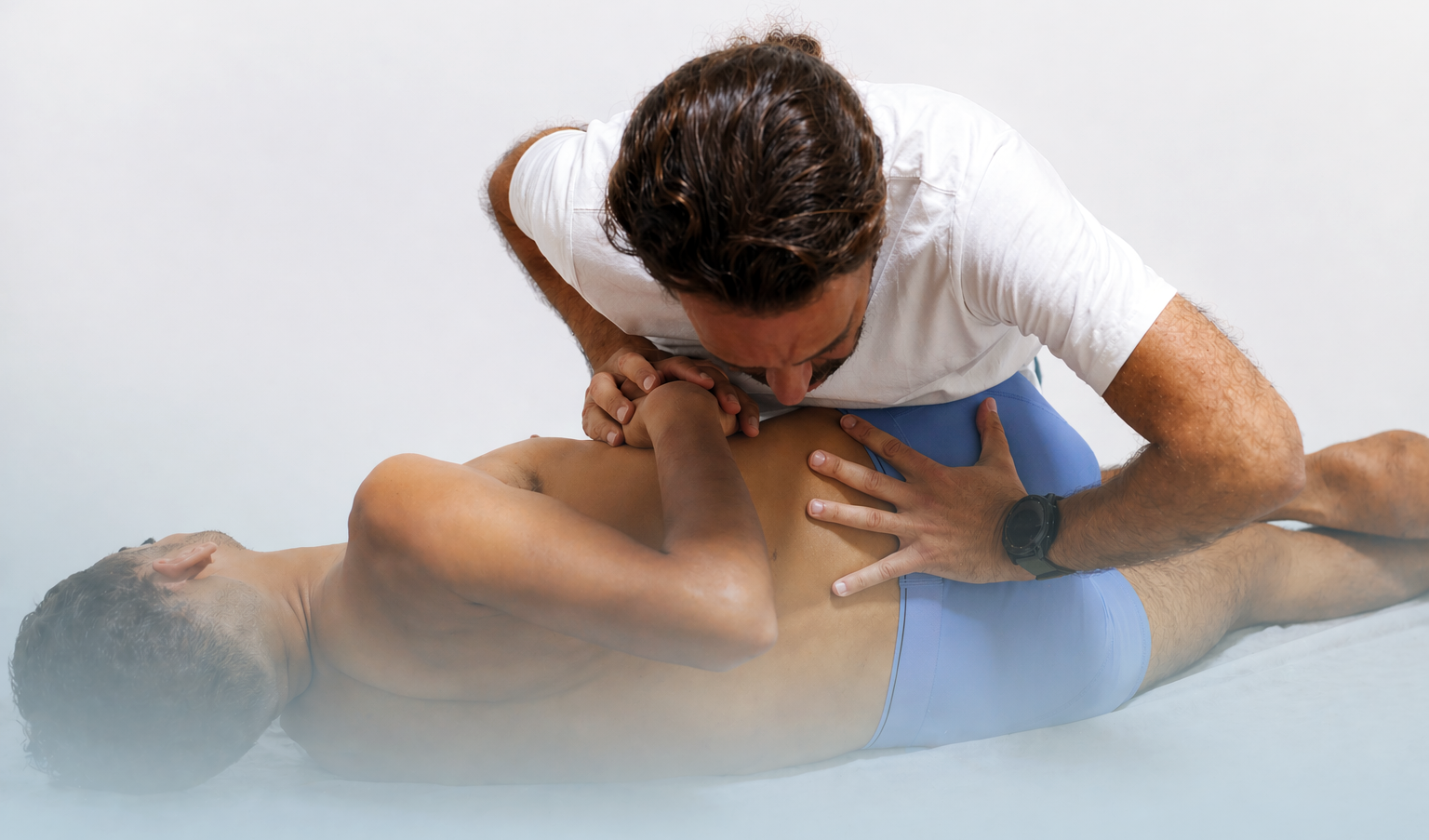
Based on this global evaluation, the goal is to release as many biomechanical restrictions as possible that interfere with the proper functioning of the body.

It is not only about looking at an isolated area, but understanding how the whole system tries to adapt.

03
Body reading

Analysis

The session includes observation and detailed analysis: standing posture, lying posture, global movements, and finer movements.

This progressive process makes it possible to identify areas of restriction and understand how they are organized within the body as a whole.

Manual work is then oriented towards releasing these restrictions and restoring more coherent mobility, adapted to the person and not to a closed protocol.

04
Daily integration

Suggestions

From the very first session, simple and adapted exercises can be suggested to integrate the work done.

These can be strength, balance, mobility, stretching, breathing or relaxation exercises, always tailored to the reality of each person.

The intention is that they can be realistically incorporated into daily life, without adding an extra demand, but rather offering useful tools to support change.

THE METHOD:

Follow-up and Continuity

Follow-up is not an obligation, but a possibility. When necessary, it allows reassessment of the situation, observation of the evolution after the first session and adjustment of the work according to what has emerged. Each new session is built on what has already been done, with the aim of continuing to improve functionality and the body’s capacity to adapt.

Safety and Guidance

A fundamental element of the process is the identification of so-called red flags or contraindications. From the outset, it is essential to recognise situations that fall outside the scope of osteopathy and require referral to other healthcare professionals. This evaluation is an integral part of the global approach and ensures a safe and responsible process.

Manual Work and Body Education

Osteopathic work is exclusively manual. Alongside this, a dimension of body education plays a central role in my practice. Stretching, mobility, strength work, balance and breathing are part of the tools proposed. The aim is to provide practical and tailored resources to support autonomy and the continuity of the work over time.

Personalised Proposals

From the very first session, simple and adapted exercises may be proposed to integrate the work carried out. Always tailored to the reality of each individual and designed to be naturally incorporated into daily life.