
RIGIDITY, ADAPTATION AND PERFORMANCE
What Bioterreno, osteopathy and very high-level sport still teach us about the human factor.
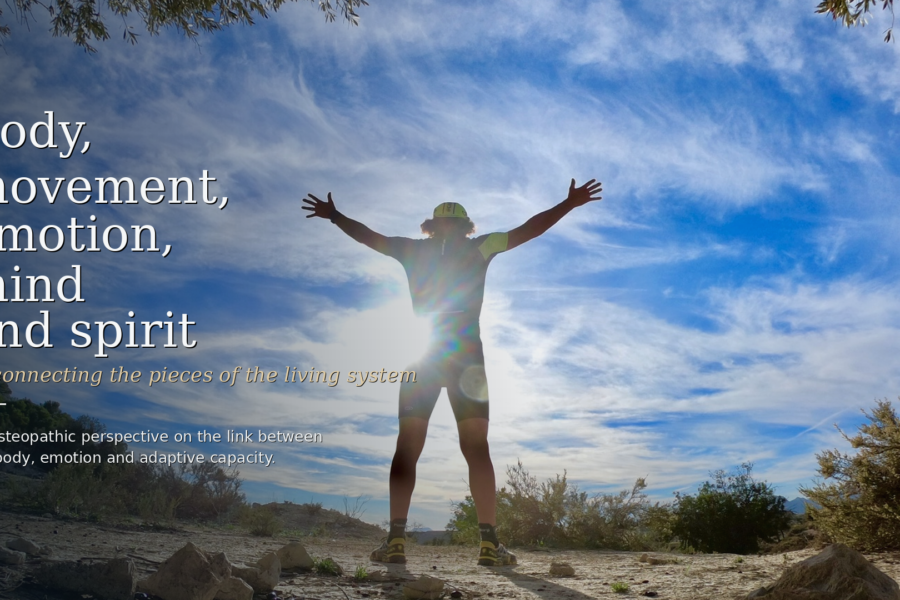
Rigidity can protect for a while, but lasting health and performance demand an organized flexibility that sustains without dehumanizing the system.
When we confuse solidity with rigidity
A recurring interpretive error runs through care, performance and our era as a whole: we too often confuse solidity with rigidity. In sport, this confusion takes almost ordinary forms. Being strong would mean enduring, gritting your teeth, taking the load, controlling, never bending.
That vision has produced generations of admirable athletes, committed staff members and remarkable work cultures. It has also produced saturated nervous systems, compressed bodies, careers worn down by repetition, relationships impoverished by excessive functionalism, and sometimes human beings gradually reduced to what they were expected to deliver. Elite sport has never been so precise, so measured, so technologically assisted — and yet it has rarely run such a high risk of losing what makes living adaptation truly valuable: margin, fine reading, clinical sensitivity and the human breath of the field.
Bioterreno reminds us: an organism is not simply a machine that produces. It is a terrain. A living milieu. Neurovegetative state, recovery quality, available energy, breathing, mechanics, emotional history, relational environment, invisible load — all interact. An athlete cannot be understood only through what he does, but through the state of the system that acts, absorbs, recovers or fails to recover. That is precisely where rigidity becomes essential.
Rigidity does not always start as a problem
We talk far too little about rigidity as a protective organization. The human system learns — and it learns fast. A shout, an atmosphere, pressure, a deadline, an unusual bodily sensation, a drop in performance: all can be registered, associated and memorised. From that point on, the organism moves into protection mode: breathing rises, tone increases, vigilance settles in, recovery loses depth.
Initially, this response is intelligent. It protects. It allows the person to endure, react, survive. But when the strategy becomes permanent, it stops being merely protective. It becomes enclosing. Rigidity is no longer a moment. It becomes a way of inhabiting the body, effort, relationship and performance.
Useful rigidity
Can protect, offer containment and help the organism survive a specific demand without collapsing.
Chronic rigidity
Begins to reduce margin, adaptation options, regulatory quality and inner freedom of the system.
When the body keeps working, but at a higher cost
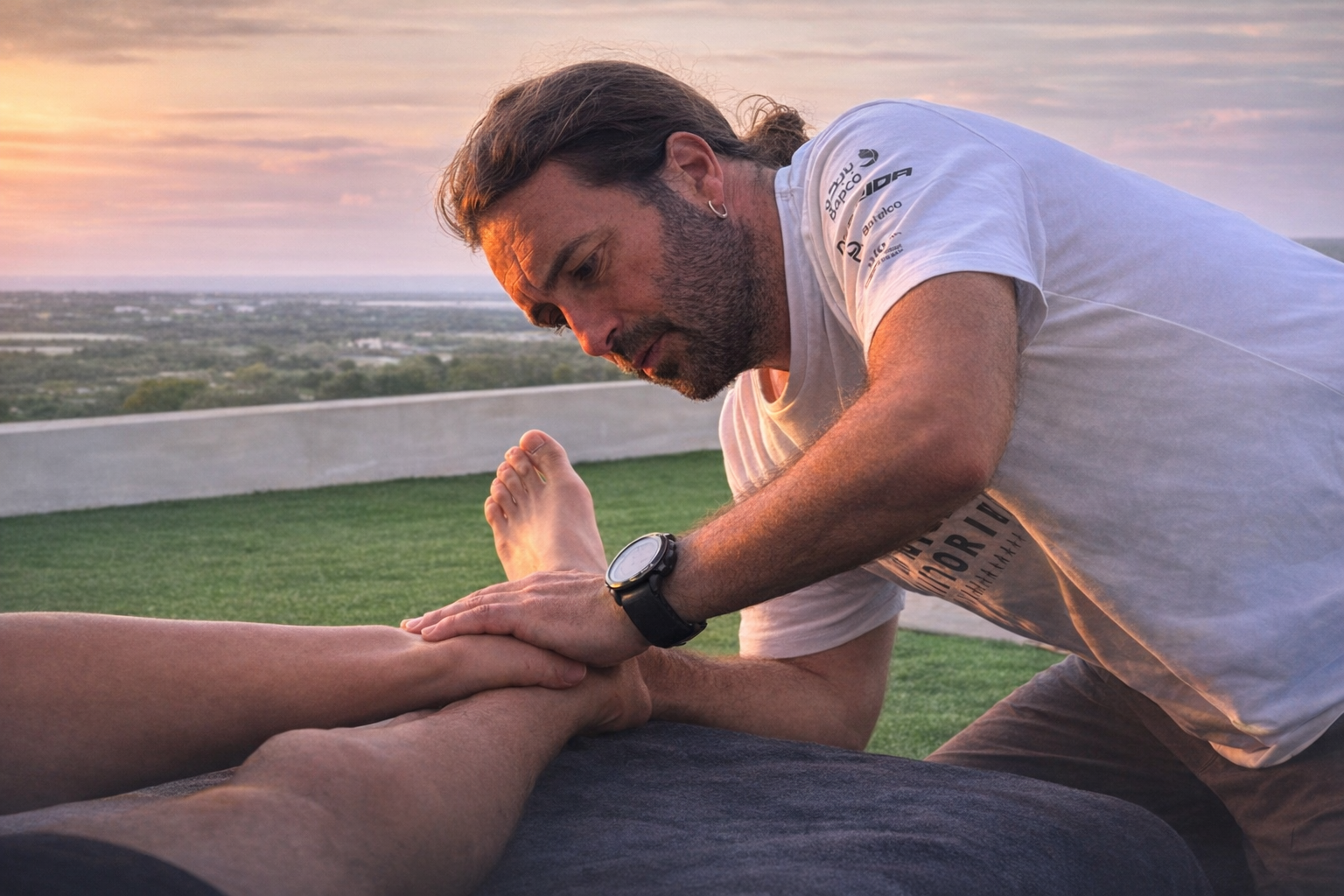
One of the most constant lessons from osteopathic and sporting fieldwork: the body often keeps functioning long after the system has already started to lose freedom. An athlete can still train, produce, perform — and yet the cost has already started to rise.
Breathing becomes higher, more thoracic. The diaphragm loses freedom. The neck, jaw and shoulders carry more load. The pelvis accompanies less finely. The gesture becomes less economical. Recovery descends less deeply. The organism may continue to respond, but it responds at a higher price — in energy, pain, fatigue, irritability, inner availability and longevity. The question is not simply whether the system still responds, but how it responds and at what price.
Space of freedom or of rigidification
Sport can be a magnificent place of transformation. It can teach listening, patience, regulation, humility and a relationship to reality. But it can also become a place of compensation, escape or control; a place where one keeps producing in order not to feel, where discipline gradually becomes rewarded rigidity.
Not everything that looks like strength is health. Certain forms of hypercontrol, perfectionism, training dependence, fear of rest or compulsion to produce can be socially admired even though they already reveal a system with very little margin left. Sport very quickly reveals an essential question: does what I do help me remain alive, or does it only help me hold on?
The risk of an incomplete reading of the human
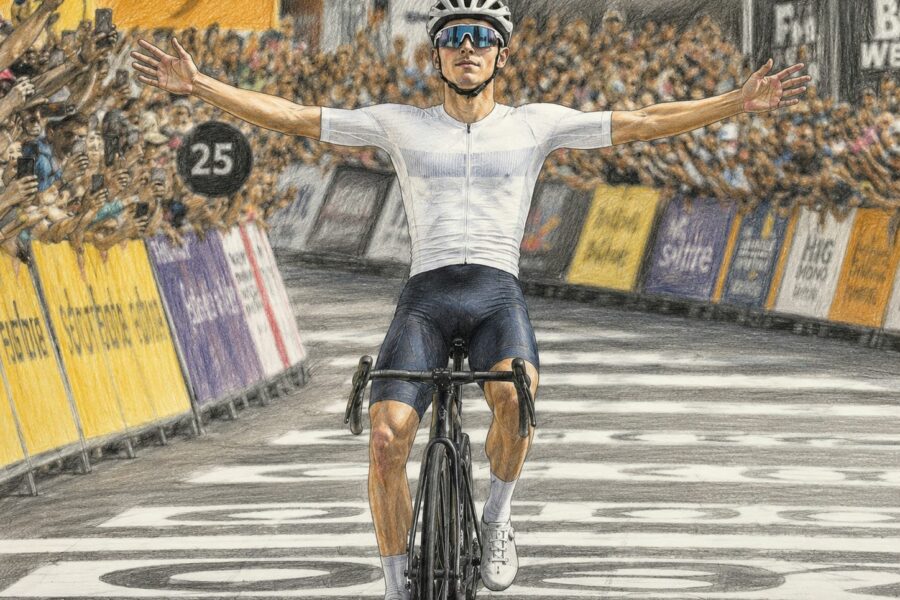
Professional cycling has become considerably more sophisticated. Loads, power, recovery, sleep, variability, nutrition, response profiles — the level of precision is impressive. But the contemporary mistake would be to believe that they are sufficient on their own. What data capture never fully exhausts the reality of a human organism. Data see parameters. They do not always see relational cost, inner compression, moral fatigue, hypervigilance, or the way a system keeps going by closing down.
One can be operational and yet losing margin. One can still perform while drifting into deep nervous fatigue. That is where burnouts, states of nervous saturation, and compulsive relationships to training sometimes appear. Rigidity may support performance for a time. Then it can end up suffocating it.
Against caricature: elite sport is not a universally rotten world
We also need the courage to say something else. Contemporary elite sport suffers not only from internal excesses of control. It also suffers from cynical caricature. Reducing elite sport to permanent suspicion — that everything is rigged, everyone corrupt — is intellectually poor. The field is far more complex. Most people working in elite sport are committed, competent, serious professionals, often highly demanding, trying to do their job properly within imperfect environments.
The real issue is not that everything is clean or everything is dirty. The real issue is that many people work well, but within systems that have not yet fully integrated the human dimension of what they ask from organisms. Systematic suspicion dehumanises everyone, replacing fine reading with angry simplification.
The judoka lesson: a compass for care, sport and performance
The experienced judoka does not always answer force with more force. He senses, reads, absorbs, accompanies, uses movement and looks for the right angle. This image captures a truth of fieldwork: durable performance needs suppleness. Biomechanical suppleness. Respiratory suppleness. Nervous suppleness. Relational suppleness. True solidity does not consist in never bending. It consists in being able to bend without losing oneself.
Reintroducing human sensitivity into elite sport is not a romantic posture. It is a modern requirement. The more precisely performance is steered, the more necessary it becomes to refine our reading of living systems in everything that is not immediately quantifiable. Not opposing data to the human factor, but making them dialogue.
What truly sustains
The body, the field, osteopathy, Bioterreno and very high-level professional cycling teach the same lesson: rigidity may help for a while, but it does not sustainably support living systems. What sustains them is organized suppleness. An intelligence of adaptation. A quality of response able to protect without enclosing, to perform without dehumanizing, to structure without crushing.
In a sporting world increasingly driven, quantified and over-commented, it becomes urgent to defend a more accurate reading: neither naive, nor cynical, nor purely technical, nor purely moral. A reading that recognises drift without turning it into the essence of an entire milieu. That places the human field back at the centre.
Because in the end, a performing system is not only a system that responds. It is a system that remains inhabitable.